The AI Revolution in Stock Market Prediction

The AI Revolution in Stock Market Prediction
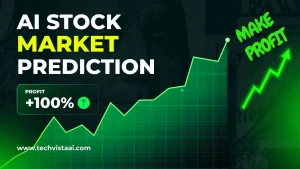
The world of stock market investing is shifting from one based on human intuition and traditional analysis (fundamental and technical) to one deeply integrated with Artificial Intelligence (AI). AI, utilizing machine learning and deep learning, has become an essential technology for handling the complexity and sheer volume of data in modern financial markets, significantly enhancing trading and investment strategies.
Harnessing Data: How AI Makes Predictions
AI systems excel by integrating and weighing diverse data inputs simultaneously a task impossible for humans. AI models are trained on massive datasets to identify complex correlations and predictive features.
Key Data Modalities Utilized by AI:
Historical Price and Volume Data:
AI analyzes time-series data (Open, High, Low, Close, Volume).Sophisticated models, such as Long Short-Term Memory (LSTM) networks (a type of Deep Learning), are used to capture complex, long-term dependencies in price movements over time.
Fundamental Financial Data:
- AI ingests and analyzes corporate financial statements (balance sheets, income statements, cash flows) rapidly.
- This effectively automates much of the work traditionally done by fundamental analysts to assess a company’s true value and health.
Market Sentiment Analysis:
- AI uses Natural Language Processing (NLP) to scan millions of unstructured data points.
- Sources include news articles, financial reports, social media posts, and forums.The goal is to gauge the collective sentiment (public mood) toward a specific stock or the market, which can be a powerful short-term predictor.
- By combining these diverse sources, AI builds predictive models that forecast not only the future price but also the likelihood of its direction and the associated risk.
Benefits of AI for Investors
The integration of AI provides several compelling advantages for all types of investors, from institutional hedge funds to individual traders:
1. Enhanced Speed and Efficiency
- Millisecond Processing: AI algorithms can process vast amounts of data and execute trades in mere milliseconds.
- Capitalizing on Inefficiencies: This speed is critical for High-Frequency Trading (HFT) and for capitalizing on fleeting market inefficiencies that human traders would miss.
- Real-time Adjustments: It allows for quicker decision-making and real-time portfolio adjustments based on the absolute latest market data.
2. Removing Emotional Bias
- Objective Decision-Making: Human investors are often hampered by emotional pitfalls like fear and greed, leading to impulsive buying or panic selling.
- Data-Driven Operation: AI systems operate purely on data and pre-programmed logic, eliminating the psychological biases that commonly undermine rational investment strategies.
3. Superior Pattern Recognition
- Complex Relationships: The stock market contains subtle and often non-linear patterns that are invisible to the human eye.
- Deep Learning Advantage: AI, especially Deep Learning models, is unmatched in its ability to detect these intricate, hidden relationships.
- More Accurate Forecasts: This leads to more nuanced and potentially more accurate and reliable forecasts than standard statistical models.
4. Optimized Risk Management
- Scenario Modeling: AI tools can model and simulate hundreds of market scenarios.
- Stress-Testing: Investment strategies can be stress-tested against historical volatility and various potential future events.
- Effective Diversification: This facilitates highly optimized portfolio management that constantly seeks to balance risk and reward, helping investors diversify effectively and set appropriate stop-loss limits.
- Inherent Limitations and Risks of AI Prediction
Despite its analytical power, AI is not infallible and faces several fundamental constraints:
1. Data Quality and Overfitting
- “Garbage In, Garbage Out”: Model accuracy is directly dependent on the quality and comprehensiveness of the data it is trained on. Flawed or “noisy” data leads to unreliable predictions.
- Overfitting Risk: Models are susceptible to over-optimization (overfitting), where they perform perfectly on past (historical) data but fail drastically when applied to new, real-world market conditions.
2. The Unpredictability of “Black Swan” Events
- Unforeseen Shocks: AI excels at predicting patterns, but it cannot predict genuinely random, low-probability, high-impact events known as “Black Swans” (e.g., sudden pandemics, wars, or regulatory collapses).
- Model Failure: These events are not encoded in historical data patterns, causing AI models to fail spectacularly during the most volatile periods.
3. Dependence on Past Performance
- Non-Stationary Markets: AI models often rely on the assumption that past patterns can predict the future. However, financial markets are non-stationary, meaning the underlying rules and relationships change over time.
- Changing Dynamics: An over-reliance on back-tested data can be a severe limitation when the market structure itself evolves.
4. Algorithmic Herding
- Amplified Volatility: As more firms adopt similar, highly effective AI models, there is a growing risk of algorithmic herding.
- Systemic Risk: If multiple AI systems simultaneously identify the same trading signal and execute trades, it can rapidly amplify volatility, create self-fulfilling price movements, and introduce systemic risk to the broader market.
Frequently Asked Questions (FAQ)
Q1: Is AI stock market prediction 100% accurate?
A: No. AI reduces uncertainty by identifying patterns, but it cannot eliminate the risk or achieve perfect accuracy due to unpredictable events (“Black Swans”) and the non-stationary nature of financial markets.
Q2: What type of AI is most commonly used for stock prediction?
A: Primarily Deep Learning (e.g., LSTMs for time-series data) and Natural Language Processing (NLP) for analyzing news and social media to gauge market sentiment.
Q3: Can a beginner investor use AI for stock trading?
A: Yes. User-friendly AI platforms and robo-advisors are available. However, beginners should understand the fundamental risks and the logic behind the automated decisions.
Q4: Does AI prediction eliminate the need for human stock analysts?
A: No. AI automates data analysis, freeing human analysts to focus on strategic oversight, qualitative factors (like management), and interpreting the broader context—leading to a more effective human-AI collaboration.