Beyond the Bot: The Real World of AI Automation in 2026
Beyond the Bot: The Real World of AI Automation in 2026
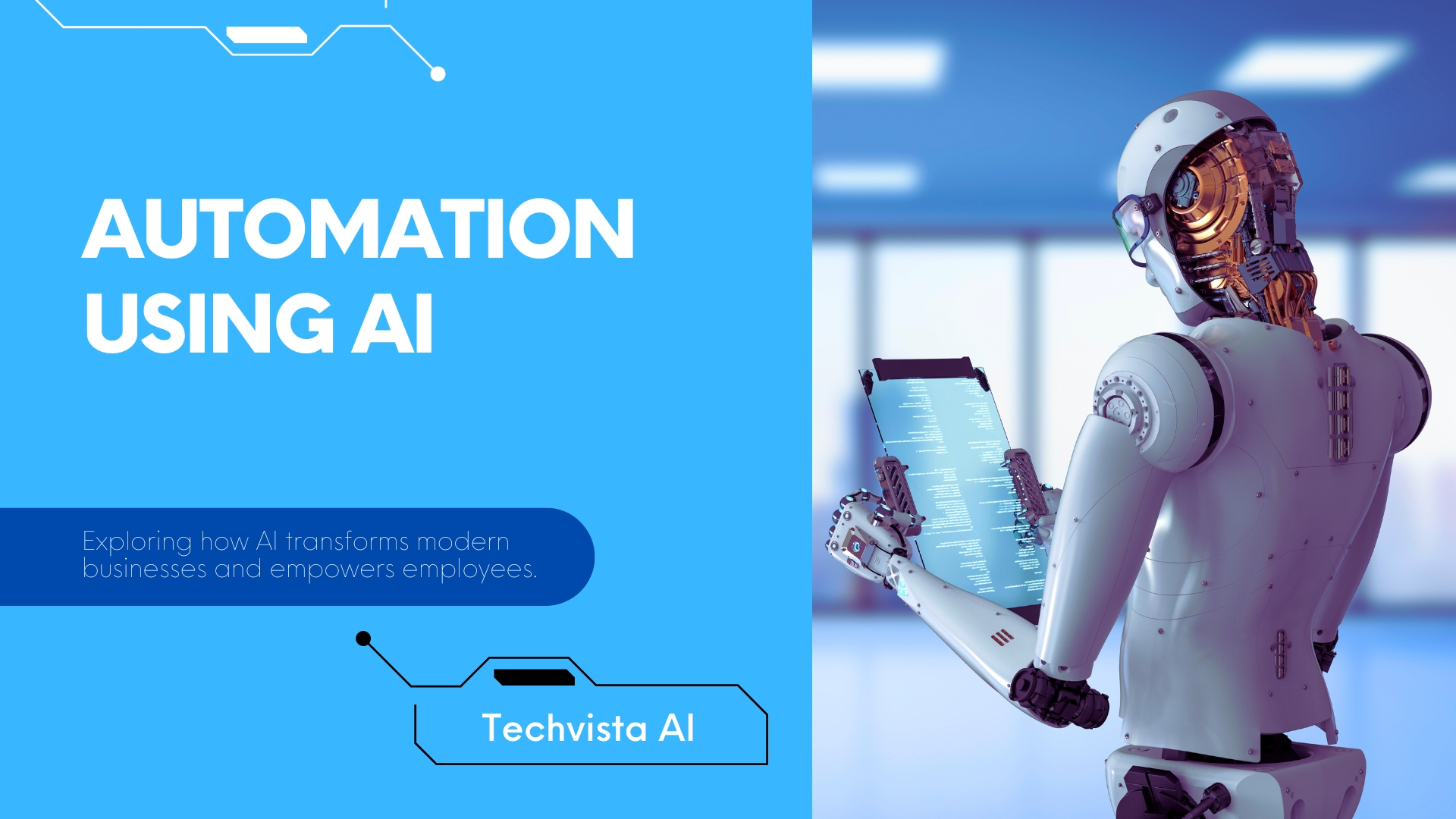
We’ve officially moved past the era where “automation” just meant a robot arm on a factory floor. Today, AI automation is about Agentic Workflows. Unlike the rigid bots of five years ago, modern AI agents can think, plan, and execute multi-step tasks without a human holding their hand at every click.
For business owners and tech enthusiasts, this isn’t just a shiny new toy it’s a survival mechanism.
1. The Rise of the “Agentic” Co-Worker
The biggest trend this year is the transition from Assistive AI to Agentic AI.
- Old Way: You ask an AI to write an email.
- New Way: You tell an AI agent, “Onboard this new client.” The agent then finds their signed contract in your inbox, creates a folder in Google Drive, sets up their project in Trello, and sends them a personalized welcome kit.
This type of closed-loop automation is where the real ROI (Return on Investment) lives. It’s no longer about saving five minutes on a draft; it’s about saving five hours of administrative “glue” work.
2. Hyper-Personalization at Scale
If you’ve noticed that marketing feels more “human” lately, you can thank AI. 2026 has brought us Multimodal Orchestration. Automation tools can now analyze a customer’s voice note, cross-reference it with their text-based purchase history, and generate a video response that addresses their specific problem.
For platforms like TechVistaAI, this means SEO is no longer just about keywords. It’s about Search Intent Optimization. AI tools are now predicting what your readers will want to know next based on the current article they are reading, allowing for a web experience that feels like it’s being built in real-time just for them.
3. The “Human-in-the-Loop” Necessity
Despite the power of automation, “Human-led” is the buzzword of the year. Why? Because AI can’t replicate E-E-A-T (Experience, Expertise, Authoritativeness, and Trustworthiness).
While an AI can automate the data entry for a financial report, it can’t explain the feeling of a market crash or the intuition behind a risky merger. The most successful automated systems today are those that handle 90% of the mechanical work but flag the final 10% the high-stakes decisions for a human to approve.
4. Accessibility: No Code, No Problem
The “vibe coding” revolution has hit automation hard. You don’t need to be a Python expert to build complex workflows anymore. Using Natural Language Processing (NLP), you can simply describe the automation you want in plain English.
“When a customer mentions a bug on Reddit, notify the dev team on Slack and draft a reply acknowledging the issue.” This democratization means that even solo founders can now operate with the efficiency of a 20-person team.
5. The Evolution of “Vibe Coding” and Shadow IT
One of the most radical shifts in 2026 is how we build these automated systems. We’ve entered the era of Vibe Coding. Essentially, if you can describe a logic flow in a conversation, the AI can build the underlying code to connect your apps.
For the readers of TechVistaAI, this is a game-changer. It means the “technical barrier” is gone. However, this brings a new challenge: Governance. When every employee can build their own automated bots, companies must find a balance between innovation and security. Automation is no longer just about efficiency; it’s about building a secure ecosystem where data doesn’t leak between automated “agents.”
6. AI in the Creative Loop: Generative Automation
Automation isn’t just for spreadsheets anymore; it’s for the creative process. We are seeing a rise in Content Supply Chain Automation.
- The Workflow: You record a 10-minute video.
- The Automation: AI automatically extracts the audio for a podcast, writes a blog post for your website, generates 10 LinkedIn snippets, and creates a “highlight reel” for TikTok.
This isn’t “lazy” content; it’s “leveraged” content. By automating the formatting and distribution, creators can spend 90% of their time on the original idea and only 10% on the busy work of posting.
7. Ethical Automation and “The Human Premium”
As automation becomes the standard, we are seeing a new market trend: The Human Premium. Just as people pay more for “hand-made” furniture, digital consumers are starting to value content and services that have a visible human touch.
Ethical AI automation in 2026 involves Transparency. Whether it’s a chatbot or an automated email sequence, the most successful brands are honest about when an AI is being used. They use automation to handle the speed, but they bring in humans to provide the soul. For your website content, this means using AI to research and structure, but always injecting your unique perspective to ensure you aren’t just another “AI-generated” site.
Key Benefits of AI Automation in 2026
- Reduced “Context Switching”: AI handles the jump between different software apps so you don’t have to.
- Predictive Maintenance: In industries like manufacturing or web hosting, AI predicts failures before they happen, saving millions in downtime.
- Real-Time Data Democratization: Employees can ask a company-wide AI bot questions like “What was our highest-selling product in Dhaka last Tuesday?” and get an instant answer without waiting for a data analyst.
Frequently Asked Questions (FAQs)
1. Is AI automation going to replace my job?
Ans: Not exactly. It is replacing tasks, not roles. While AI handles repetitive data crunching and scheduling, it creates a “productivity gap” that humans must fill with strategy, creative direction, and emotional intelligence.
2. Is it expensive to start automating with AI?
Ans: In 2026, the cost of “inference” (the cost of AI thinking) has dropped significantly. Many tools offer “pay-as-you-go” models, making it affordable for small businesses to start with one specific workflow rather than a massive upfront investment.
3. How does AI automation help with SEO?
Ans: AI automates the “boring” parts of SEO—like meta-tag generation, internal link auditing, and keyword clustering. This allows creators to focus on writing high-quality, human-first content that ranks better in an era where search engines prioritize original insights.
4. Can AI automation handle customer service effectively?
Ans: Yes, but with limits. Modern AI chatbots use Sentiment Analysis to detect if a customer is frustrated. If the AI feels the situation is escalating, it can automatically “hand off” the chat to a human agent along with a summary of the conversation so far.
5. What is the first step to automating my business?
Ans: Start by identifying your “energy drains.” Look for any task that is repetitive, multi-step, and boring. Use a “no-code” agent builder to automate that one specific process first, measure the time saved, and then scale from there.